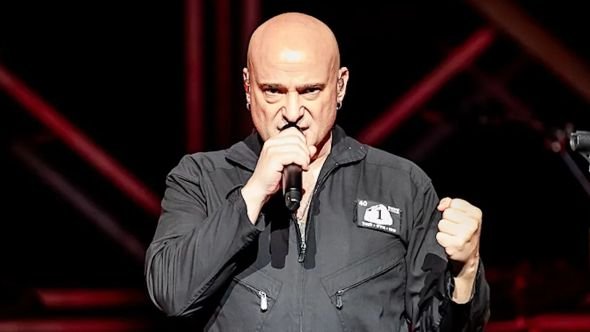
Billy Corgan recently sat down with David Draiman for an in-depth conversation on Corgan’s podcast The Magnificent Others, where the two rock veterans tackled a question that has long divided musicians and fans alike: should music be political?
During the hour-and-a-half discussion, Corgan asked Draiman directly whether he believes artists should openly mix politics with their music. The Disturbed frontman didn’t hesitate to answer.
“I think musicians should speak to their heart no matter what it may be,” Draiman explained. He added that protest music has always been a powerful part of the genre’s history and that artists shouldn’t shy away from delivering strong messages through their art.
According to Draiman, rock and metal have always thrived on confrontation and social commentary. He argued that music has historically played an important role in shaping cultural conversations, especially during earlier decades when artists were far more outspoken about political issues.
“There’s no reason why art can’t be fused with powerful messages,” he said, insisting that music and meaningful themes naturally belong together.
Corgan pointed out that the 1960s era was filled with politically outspoken music and suggested that many modern artists may avoid controversial topics today because they fear alienating their audiences or damaging their careers. Draiman agreed with the observation but took it a step further, arguing that hesitation from artists often comes from fear rather than principle.
In his words, avoiding difficult subjects isn’t bravery — it’s “cowardice.” Draiman criticized what he sees as a culture where people speak only to those who already agree with them instead of engaging with broader conversations.
The discussion eventually moved beyond music into real-world political issues in the United States. Draiman explained that his own views often land somewhere in the middle of today’s highly polarized debates. He expressed support for law enforcement and federal agencies while also acknowledging systemic problems that should be addressed.
One example he raised was the ongoing tension surrounding immigration enforcement. While supporting the role of federal agencies, Draiman said he believes the U.S. should create faster and clearer pathways to citizenship, which he sees as a practical way to reduce division.
He also criticized the broader political climate, arguing that many leaders exploit social issues for personal gain rather than attempting to solve them.
“I wish people were thinking more about solutions,” he said, suggesting that too many debates have turned into partisan battles rather than constructive discussions.
For Draiman, the larger takeaway is that music should never be afraid to confront uncomfortable realities. Rock and metal, he believes, were built on challenging authority and pushing conversations forward.
In that sense, the debate over whether music should be political may not actually be a new question at all. For artists like Draiman, it’s simply a continuation of a tradition that has existed for decades — one where music doesn’t just entertain, but also reflects the tensions and ideas of the world around it.