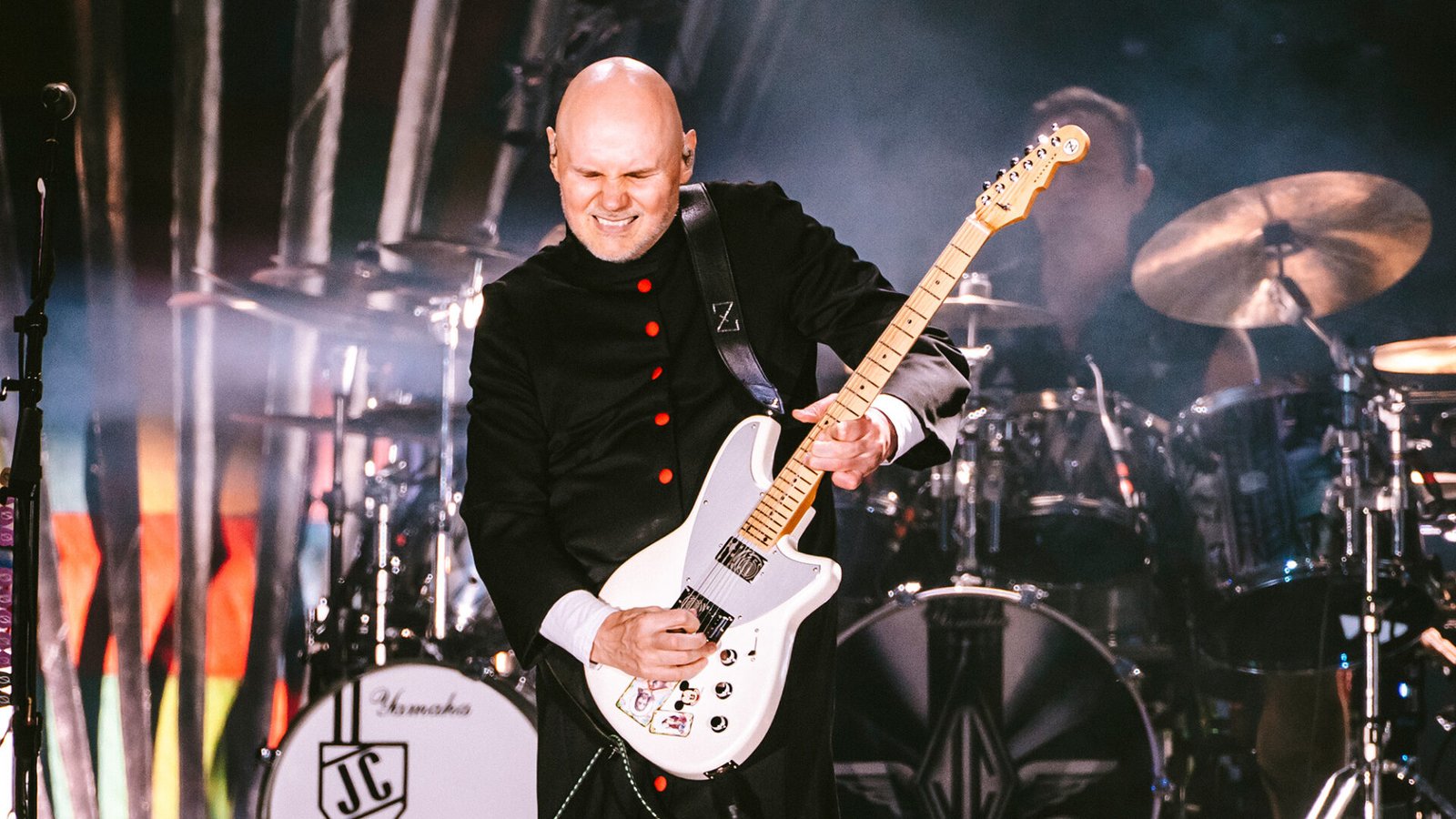
When Billy Corgan says something provocative, it is worth reading the whole thing before reacting. The Smashing Pumpkins frontman — one of the most intellectually restless and outspoken figures in rock history — set off a wave of debate earlier this year when he declared on his podcast that pop music, not rock, carries the most Satanic energy in the modern music landscape. The statement exploded across social media. The context behind it is considerably more interesting than the clip.
Speaking on an episode of his podcast The Magnificent Others with guest Conrad Flynn, Corgan said: “In many cases, the most Satanic representation in music over the last 20 years has been the pop stars because they are creating, they are knowingly creating a false image, and they are servile to the false image to the point of jacking up their faces and jacking up their voices, and deluding their audience that they’re somebody that they’re not. And they’re all doing it in plain sight.”
This is not the argument most people expected from a man whose band spent the early 1990s being lumped in with a rock scene that conservative commentators routinely accused of Satanic influence. Corgan’s point is essentially the inverse of that old moral panic — he is arguing that the real spiritual deception in music is not found in distorted guitars and dark imagery but in the manufactured perfection and enforced idol worship of the pop machine.
Corgan drew a sharp contrast between pop and alternative music: “As you know as a fan of alternative music, alternative music is the exact opposite — it’s about, well, warts and all.” The argument being that rock and alternative music, at their best, present the artist as a flawed and genuine human being. Pop, he contends, does the opposite — building an image designed to obscure the person behind it and cultivate a relationship between fan and constructed persona that he describes in terms usually reserved for religious devotion.
Corgan expanded on the psychological mechanics of this dynamic, describing how the deception traps both artist and audience in a cycle neither can easily escape: “At some point you’ll see the audience reach a point of cognitive dissonance where they know that the person they want to believe in an idolatrous way isn’t that person, and they force the people to double down on the idolatry — because that’s the only thing they can do.”
The word “idolatry” is doing a lot of work in Corgan’s argument. He is not primarily making a claim about pentagrams or occult rituals. He is making a claim about the nature of manufactured celebrity — the way pop stardom functions as a system of false worship, in which fans invest genuine emotional devotion in a constructed image that does not correspond to reality. The gap between image and reality, in his view, is where the Satanic element lives — not in the aesthetics but in the deception.
He also touched on less conventional territory during the conversation, revealing that he had been approached by elements of the U.S. government at different times and asked to do things that led him to believe some artists were taking what he described as “a type of deal with the devil” with the most powerful people in the world. He declined to elaborate on the specifics, drawing a parallel to the time he discussed experiencing a shape-shifter on The Howard Stern Show — a claim that, he noted, turned him into something of a target in public spaces afterward.
The conversation did not stop at pop music’s spiritual dynamics. In a follow-up episode, Corgan expanded his theory to the broader question of why rock music lost its cultural dominance in the late 1990s. He argued that “pop had more connectivity to Satanism than rock music” and speculated about why rock stopped being mainstream around the time the Pumpkins released Adore in 1998: “I think rock has been purposefully dialed down in the culture. If you were at MTV or around MTV, 1997, ‘98, suddenly they decided rock was out when rock was still very, very high up in the thing. And it was replaced by rap. Their standards and practices immediately shifted. So now the things that weren’t allowed were suddenly allowed. People were waving guns. Some people assert that the CIA was involved in that — again, above my pay grade. But I saw it happen.”
He continued: “Pop is completely dominant. Rock is probably the most dominant ticket-selling thing in the Western world, and yet there’s almost no representation of rock in culture. So why do we have that schism? I think they purposely dialed down the ability of rock stars to have a voice in the culture.”
Corgan’s theory drew a notable response from Anthrax drummer Charlie Benante, who agreed with the assessment that rock had been deliberately marginalized. “There was a coup,” Benante said, echoing Corgan’s broader point that the shift away from rock was not entirely organic but driven by industry-level decisions that reshaped what music was given cultural prominence.
Music video director Joseph Kahn offered a different theory in response to Corgan’s comments, posting on X: “Rock died when it separated itself from sex. Did a video for a huge rock band and they argued over ‘the male gaze.’ PC and rock is death. Everyone would rather be Rolling Stone Magazine than the Rolling Stones. Music is ultimately driven by horny teenagers and they fled to rap.”
The fan reaction to Corgan’s original pop music comments was broadly supportive, though predictably divided. One commenter on Instagram wrote: “The ones you grow up listening to your parents were weirded out about aren’t the ones trying to indoctrinate you. The Taylor Swifts, Beyoncés, Sam Smiths, Lady Gagas, Lil Uzi Vert, Lil Nas X — why are these pop stars so obsessed with Satanic imagery?” Others pushed back, arguing that Corgan’s framing conflated the personal authenticity of rock artists with a moral superiority the genre does not inherently possess.
What is clear is that Corgan’s argument is more sophisticated than its headline suggests. He is not making a claim about devil worship. He is making a claim about authenticity, idolatry, manufactured identity, and the spiritual cost of building a public persona designed to replace rather than represent the human being behind it. Whether or not you agree with his conclusions, the argument he is making about the relationship between pop stardom and false devotion is one that deserves more than a knee-jerk reaction — in either direction.