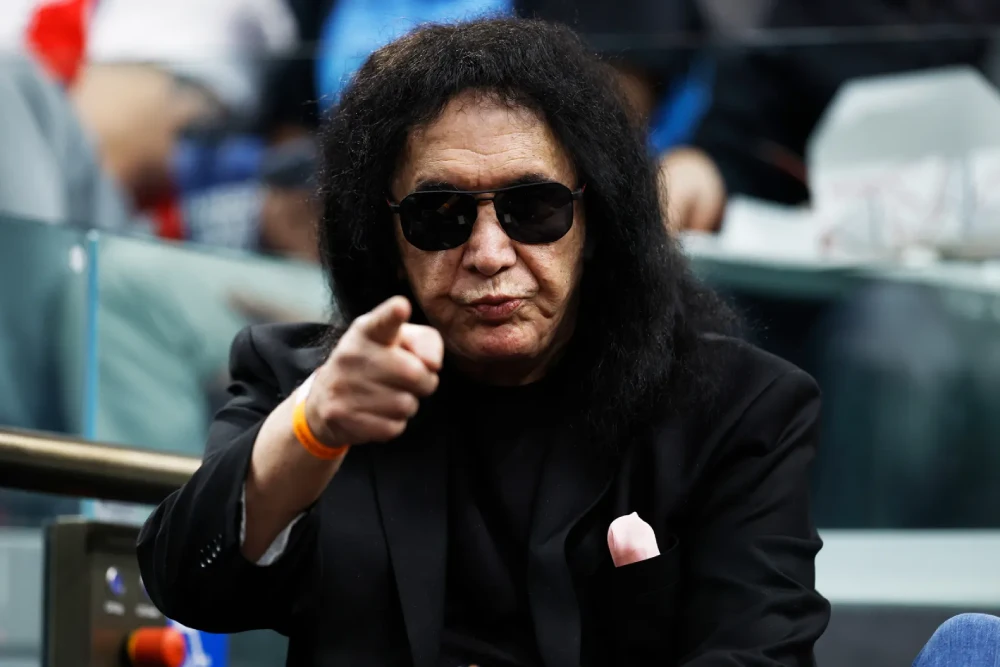
For decades, Gene Simmons built his reputation as one of rock’s loudest and most unapologetic voices. As the face of KISS, he didn’t just sell music—he sold attitude, spectacle, and a larger-than-life persona that fans either loved or loved to hate. But over time, that same blunt, no-filter approach started pushing people away.
One of the biggest turning points came from his repeated claim that rock music had “died.” Simmons didn’t blame changing trends or the industry itself—he blamed fans. In his view, the shift from buying albums to streaming and downloading music destroyed the financial system that once allowed record labels to invest in artists and help them grow. He argued that without that support, new rock stars simply couldn’t emerge. For many listeners, that argument felt less like analysis and more like accusation—and it didn’t sit well.
The backlash wasn’t built on a single opinion. Simmons developed a pattern of controversial statements that gradually chipped away at his image. The most damaging moment came when he made deeply insensitive comments about depression, suggesting that people struggling with it should go ahead with suicide. The response was immediate and intense—fans were outraged, fellow musicians criticized him, and even radio stations pulled KISS songs. For many, that crossed a line that couldn’t be ignored.
At the same time, Simmons’ long-standing business-first mindset became harder for fans to overlook. He had always been transparent about turning KISS into a global brand, with merchandising, licensing, and marketing deals that extended far beyond music. While some admired his ability to build an empire, others felt it came at the cost of authenticity. To critics, he began to look less like a rock musician and more like a businessman capitalizing on a legacy.
Another issue was his tendency to point fingers rather than adapt. As the music industry evolved, many artists embraced streaming platforms and new ways of reaching audiences. Simmons, however, often framed these changes as the root of the problem, placing responsibility squarely on listeners. For modern audiences—especially younger fans—this perspective felt disconnected from reality. Streaming wasn’t killing music to them; it was simply how music worked now.
That growing gap between Simmons and the audience became more obvious over time. Rock itself hadn’t disappeared—it had just changed form. But Simmons’ insistence on viewing the past as the only valid version of the genre made him seem out of step with the present.
He didn’t lose fans all at once. It happened gradually, through a combination of sharp opinions, controversial remarks, and a refusal to adjust his stance. For some, he remains a symbol of honesty and old-school rock attitude. For others, he became unnecessarily abrasive and out of touch.
In the end, the same voice that helped make Gene Simmons iconic is also what drove many fans away.