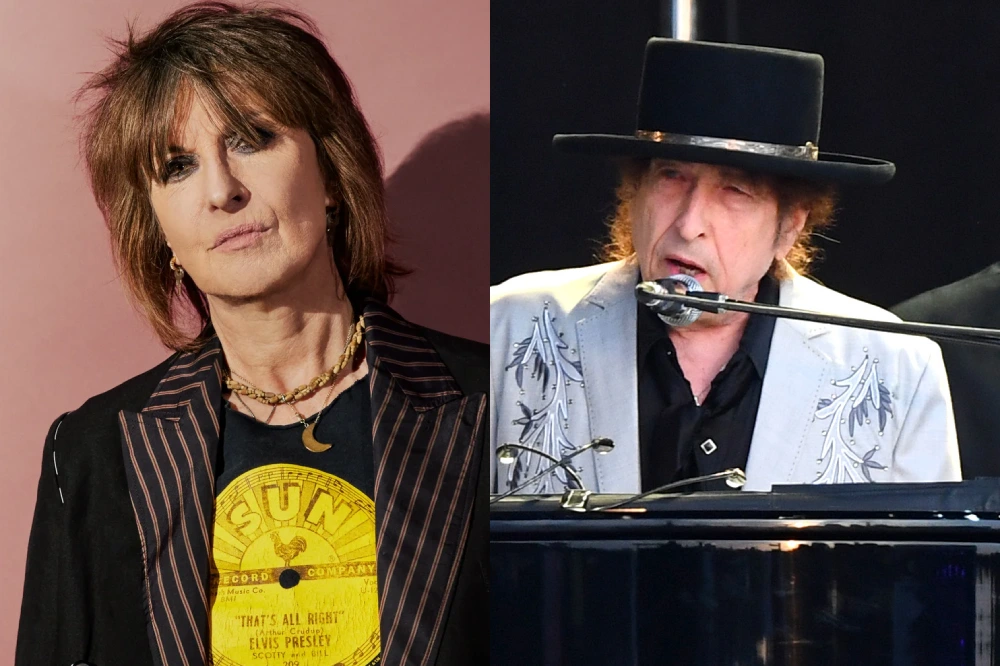
Chrissie Hynde has had enough. In a letter posted to social media on June 2, the Pretenders frontwoman backed Bob Dylan’s strict phone ban and went after the fans who keep breaking it; and her words are not gentle.
The debate about phones at concerts is not new. But Hynde’s letter gave it a jolt it badly needed, because she didn’t frame it diplomatically. She called it a “weird compulsion.” She compared phone-addicted audiences to monkeys. She said if Jesus Christ walked into a room, the first thing people would do is pull out their phones.
It’s worth reading carefully, because it’s not really a rant. It’s a genuine question; why do people feel compelled to record every moment they’re supposed to be living; and nobody in rock right now is asking it more bluntly.
What Hynde Actually Said
The letter began with Hynde recounting a dinner she shared with Emmylou Harris the night before Harris played the Royal Albert Hall in London.
“Our conversation naturally turned to people on their phones at concerts,” Hynde wrote. “This is a subject that comes up every time I meet any artist. It’s become like an unpleasant fug hanging over the head of all artists.”
She described venues plastering themselves with no-camera signs that fans simply ignore, treating the artist’s explicit request as optional.
“You can plaster a venue with signs requesting ‘NO CAMERAS’ but people don’t respect it,” she wrote. “It’s as if people feel entitled, even though the artist clearly has asked them not to do it.”
Then came the passage that got everyone’s attention. Referring to Bob Dylan’s mandatory Yondr pouch system, which locks phones in a sealed case for the entire show, she wrote:
“Bob Dylan ensures that phones are sealed in a bag before a show. You would think an artist of his stature could make a simple request and the audience would respect it. No chance. People will still sneak in a camera or a phone. It’s like a weird compulsion that people can’t control.”
She went on: “And no one seems to be able to understand why artists don’t like it. If you’ve ever had a mosquito buzzing around your head when you’re trying to go to sleep, you will get a vague idea of what it’s like to have people filming your show or taking photos while you’re on stage. If Jesus Christ were to walk into a room the first thing everyone would do would be to pull out their phone.”
What Dylan’s Ban Actually Looks Like
Dylan has been running his shows phone-free since 2021, when he kicked off the Rough and Rowdy Ways tour. The ban isn’t just a polite request. Every attendee at a Dylan show is handed a Yondr pouch at the door; a sealed magnetic case that locks automatically when you enter the venue. Your phone stays in your pocket, but inside a pouch you cannot open until you reach a designated unlocking station in the lobby or until the show ends.
Nobody is taking your phone away. You can leave at any time, unlock it, and have it re-locked when you come back in. But the moment you’re in the room with Dylan, the phone is sealed. His press releases have described the policy as a way to “make the occasion even more unique.”
The irony Hynde and others keep pointing to: despite all of this, full recordings of virtually every Dylan show from the past five years are available online within hours of the final song. The compulsion finds a way. Someone always sneaks a device in.
Jack White was one of the first major rock artists to go Yondr, back in 2022. His statement at the time was direct: “We think you’ll enjoy looking up from your gadgets for a little while and experience music and our shared love of it IN PERSON.” Ghost went fully phone-free for their entire 2025 tour. Iron Maiden’s Paris show this June 22, being filmed for official release, has the same restriction in place. Bruno Mars. Childish Gambino. The list keeps growing.
The Other Side of the Argument
Not every artist agrees with the ban approach. Back when Dylan first enforced the Yondr policy for his 2024 UK dates, Damon Albarn pushed back publicly. His position was essentially the opposite of Hynde’s: “If you start banning things where does it end? I think you’ve just got to turn up and do your thing. People won’t want to be on their phone if you’re engaging with them correctly.”
It’s a reasonable argument on paper. If the performance is compelling enough, the audience forgets about their phones. The problem is that it puts the entire burden on the artist and treats the phone as a symptom rather than a habit; and habits don’t disappear just because the show is good.
Why This Keeps Coming Up
Every working musician runs into it. The moment the lights go down, hundreds of screens light up. You’re playing to a crowd of glowing rectangles. Artists have complained about it for years: Adele, Jack White, Dave Grohl, Roger Waters, Patti Smith. The difference now is that the technology to actually enforce a ban exists and is being deployed at scale.
The Yondr pouch has been used at over 10,000 events worldwide. That number has grown sharply in the last two years. Schools use it. Comedy clubs use it. Clubs in Berlin, Ibiza, and Manchester have gone phone-free as standard policy. The conversation is no longer theoretical.
What Hynde added to it, in her letter, is the sheer frustration of a performer who has been watching this creep into every show for years. The entitlement angle is the part that stings, not just that people film, but that they do it after being explicitly asked not to, at a show run by one of the most respected artists alive.
Whether you agree with the ban or not, her question is a fair one: what exactly are people capturing that’s worth more than the thing they’re standing in front of?
Chrissie Hynde’s letter was posted to her social media on June 2, 2026. Bob Dylan’s current tour continues with phone-free shows through the rest of the year.