Less than a year after Ozzy Osbourne’s death, his family has announced plans to bring him back; digitally. The reaction from fans has been fierce. Jack Osbourne has fired back.
At the Licensing Expo in Las Vegas on May 20, Sharon and Jack Osbourne took the stage and revealed a partnership with AI tech company Hyperreal to create a fully interactive digital version of the late Black Sabbath frontman. Not a tribute. Not an archive. A walking, talking, responsive AI avatar, built from what Jack called “the digital DNA of Ozzy Osbourne”; that will appear on life-sized touchscreens across the U.S. and U.K. this summer, and eventually around the world.
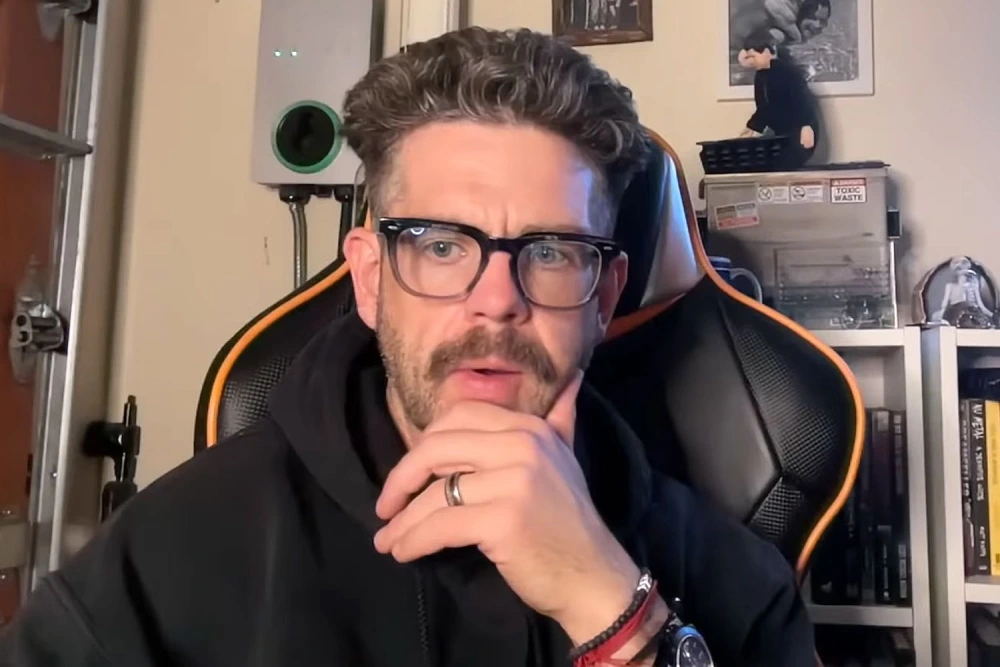
The backlash was immediate. Fans called it a cash grab. Some called it ghoulish. One described it as the family “renting out a corpse.” Within days, Jack Osbourne was on YouTube live, addressing it head-on.
What Jack Said
“Here’s the thing, it’s gonna be so tasteful what we’re doing,” Jack told viewers. “It’s not gonna be f**king lame.”
He pushed back on the idea that Digital Ozzy is just a cheap chatbot wrapped in his father’s face. “This isn’t just like hooking up an image of my dad to ChatGPT. This is some high-level technology that we’re gonna be working with, and it’s gonna feel very real, and it’s kind of wild how it will be utilised.”
Then came the part that will either put fans at ease or make them angrier, depending on where they stand. Jack says his father knew about this before he died, and approved it.
“It’s really cool, and it’s something that I think my dad would be into. We actually talked about it before he passed, about doing something like this. So, yeah. I know he would be into this.”
What the Avatar Actually Is
The project is formally titled The Enduring Legacy of a Rock Icon and His Family: Ozzy Osbourne and The Osbournes. The Hyperreal partnership handles the AI side, voice, image, and movement, while a second company, Proto Hologram, is handling the physical hardware.
The digital Ozzy will debut in Proto Luma units; described as life-size, patented holoportation devices running an 86-inch multi-touch volumetric display with 4K resolution and high-fidelity speakers. These aren’t screens showing a video loop. The intention is a fully interactive experience where you can ask questions and get answers back in Ozzy’s voice.
Sharon was blunt about what that means: “You can ask Ozzy anything, and he will answer you in his own voice, and the answers will be what Ozzy would have said. We’re going to take it all around the world. People can talk to him and he will talk back.”
Jack went further at the Expo, hinting at the commercial possibilities: “Technology has come such a long way to where it’s almost drag and drop. You could shoot a template for a commercial, literally, prompt what you want Digital Ozzy to do in that commercial and you just drop it in. It’s that simple now.”
That last part, the mention of commercials, is where a lot of the anger has been directed. Critics read it as the family openly discussing using Ozzy’s likeness to sell products after his death.
Proto Hologram founder David Nussbaum addressed the project’s intent directly: “It’s an honor to be trusted to bring one of the true gods of rock back to the world to continue to connect with fans. Every element of his avatar was built exclusively from authenticated, approved source material: curated, consented, and controlled by the people who love him most.”
Who Ozzy Was, and Why This Matters
Ozzy Osbourne died on July 22, 2025, at the age of 76. His cause of death was not disclosed, though he had been diagnosed with Parkinson’s disease in 2019.
His final live performance took place just 17 days before his death, at Black Sabbath’s star-studded farewell concert Back to the Beginning at Villa Park in his home city of Birmingham. The all-day event reunited the original Black Sabbath lineup; Ozzy, Tony Iommi, Geezer Butler, and Bill Ward, for the first time in 20 years, with sets from Metallica, Slayer, Pantera, Gojira, Alice in Chains, and others.
Sharon has since revealed that doctors warned Ozzy he might not survive long after the concert. “Two weeks before the show, they said he could probably die, and he did,” she said. “But he wanted to do it so bad.” He performed from a throne shaped like a bat. It was the last time most people saw him.
A 100-minute concert film from that night; Back to the Beginning: Ozzy’s Final Bow, is due in theatres in early 2026.
The Bigger Argument
The Digital Ozzy announcement sits inside a debate the music world has been having for years, getting louder as the technology gets better. ABBA opened their ABBA Voyage digital concert experience in London in 2022 and it has run to packed houses ever since. A digital Tupac hologram performed at Coachella back in 2012. More recently, a digital Maria Callas toured opera houses across Europe.
Each time, the same questions come up. Who owns a dead artist’s likeness? Is recreating them an act of preservation or exploitation? Does it matter if they said yes while they were alive?
Jack’s claim that Ozzy discussed and approved the concept before his death is the crucial detail here. If true, and there is no reason offered yet to doubt it, it changes the conversation. This isn’t a family making unilateral decisions about a man who can no longer object. It’s a family executing something he reportedly agreed to.
Whether fans accept that depends on how much they trust the Osbournes’ version of events, and how they feel about the idea of technology standing in for a person who is gone. Neither of those is a simple question.
What’s not in dispute: Ozzy Osbourne was one of the most singular presences in the history of rock music. The voice, the movement, the chaos, the humour; all of it was deeply specific to one man. Whether a machine can carry any of that into a touchscreen in a shopping centre, and whether it should, is the argument the rock world is going to be having for the rest of this year.
The Digital Ozzy experience is set to begin rolling out on life-sized interactive screens across the U.S. and U.K. this summer.