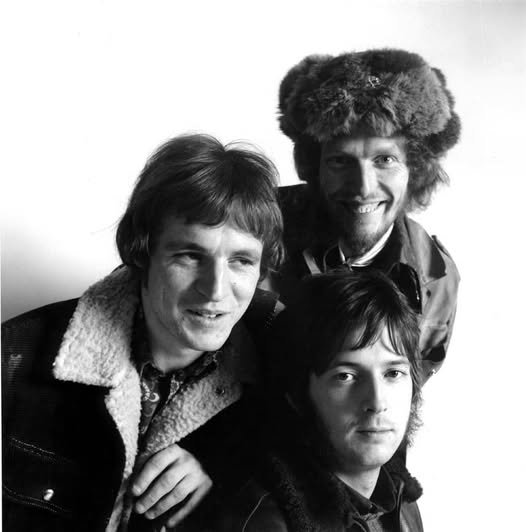
While Eric Clapton, Jack Bruce, and Ginger Baker were highly respected musicians in their own rights before coming together, they did not initially emerge as a fully-formed musical unit. At least, that is exactly how Clapton remembers it.
Admittedly, the band’s entire career trajectory moved at a million miles per hour, and even their harshest critics would have to admit they got up to speed incredibly fast. Remarkably, despite leaving behind a massive back catalog that suggests a much longer era of dominance, the trio was only actively playing together for just over two years, releasing a total of four records.
The Illusion of Perfection
The musical combination of Clapton, Bruce, and Baker was undeniable magic. Complemented by highly clever marketing, the group rapidly captured the fascination of the general public. However, despite the immense adulation being thrown his way from all directions, Clapton never viewed Cream as a finished, cohesive article during this stage.
Before helping to form the group, Clapton had completed priceless apprenticeships within the music business that put him on the direct path to guitar greatness. After initially establishing his skills in The Yardbirds, the late John Mayall took Clapton under his wing to teach him the tricks of the trade before it was time to step out with Cream.
Imagine trying to navigate that creative fire while managing the rhythm section. Ginger Baker and Jack Bruce had a shared history of playing together in the Graham Bond Organisation. Though they were musically aligned and spoke the exact same sonic language, they endured a famously fractious relationship off-stage. Nevertheless, the combination of these three distinct forces made Cream an immediately tantalizing proposition.
Fresh Cream: Masterpiece or Disappointment?
Mere months after officially forming, the trio released their debut studio effort, Fresh Cream, on December 9, 1966. The album stood as the very first LP released on the Reaction Records label, which was owned by producer and manager Robert Stigwood. Stigwood played a pivotal role in constructing a grand mythology around the new group.
For a band that barely existed shortly before entering the studio, the album achieved monumental commercial and critical success—a record that continues to stand up decades later. To the average rock fan, Fresh Cream represents a beautiful, beyond-criticism blend of jazz, blues, and rock. Yet, Clapton, a notorious perfectionist, has never shared that glowing perspective.
Instead, Clapton firmly believed that the band needed much more time in the studio to smooth out their rough edges. Shortly after the record hit shelves, even as the rest of the music industry hailed it as a flawless masterpiece, Clapton openly admitted his dissatisfaction:
“It could have been better. We were working on it so long ago, and we have greatly improved since then. I’m also not completely happy with the production”.
“Smoke and Mirrors”
Time has not softened Clapton’s harsh stance on their debut work. When directly asked about Fresh Cream by Classic Rock in 2017, his physical reaction spoke volumes:
“Oof [mimes being winded by disappointment]. I thought the John Mayall album was better than the Cream stuff. I thought we were really weak, to be honest, on record”.
Furthermore, his sharp criticisms are not strictly reserved for their debut. Clapton has confessed that he views the vast majority of Cream’s back catalog as an overhyped illusion:
“There were only a few things that I really was proud of – then and now. Most of those were on the farewell album [Goodbye, 1969]. I don’t know. I think we got lost quite quickly with Cream. It was all just smoke and mirrors”.
The Trap of the “Supergroup” Label
According to Clapton, the heavy burden of being labeled a “supergroup” ultimately damaged the band’s long-term survival. The tag incited an ongoing internal power struggle due to the total absence of a clearly defined leader.
“One minute it would be me, the next minute it would be Jack, the next it would be Ginger,” Clapton explained. “It wasn’t cohesive. Before we got very far we became a supergroup. It was that thing of trying to catch up with your own myth”.
While the “supergroup” moniker may not have been entirely accurate, it served as the ultimate catalyst for their explosive early success and forced audiences to pay attention to Fresh Cream. Though the trio were certainly not rookies, they were not exactly household names either before joining forces. It was the band’s groundbreaking marketing strategy that transformed them into one of the most talked-about acts in the country, establishing the platform for everything that followed.
This aggressive promotional push also meant that Clapton’s desire for more studio time was impossible to fulfill. The group felt immense pressure to strike while the iron was hot and instantly prove they could back up the massive hype.
Ultimately, they rose to that challenge with spectacular poise. The sheer brilliance of Fresh Cream forced even their most stubborn doubters to begrudgingly accept the band’s magnificence, cementing it as one of the most significant records of the 1960s.
Even if they weren’t a true “supergroup” before entering the studio, the arrival of Fresh Cream turned them into an undeniable one, transforming Clapton, Bruce, and Baker into absolute stars. Though Clapton wishes he could have altered the process, the album ultimately laid the crucial foundation for him to eventually become a triple Rock and Roll Hall of Fame inductee.