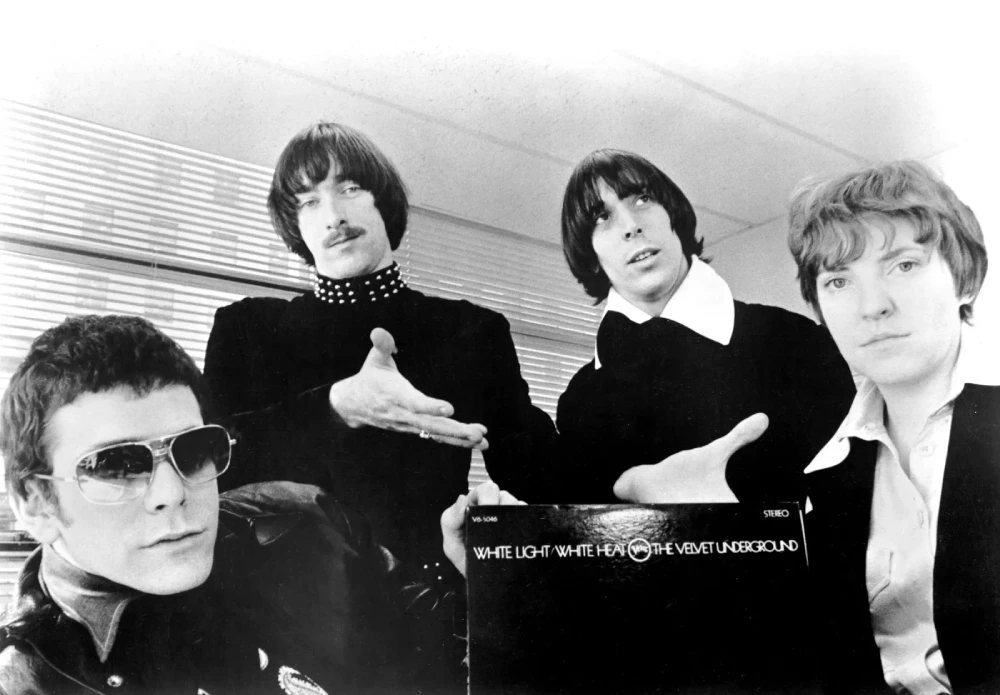
NEW YORK CITY — September 1967. The rest of the country was nursing a hangover from the technicolor dream of the Summer of Love. Out on the West Coast, bands were singing about peace, flowers, and gentle vibrations. But inside the claustrophobic, dimly lit confines of Scepter Studios in Manhattan, the flowers were dead. The Velvet Underground hadn’t come to spread love. They had come to wage war.
The mission was simple, yet utterly terrifying: record the closing track for their second album, White Light/White Heat. The song was “Sister Ray.” It was meant to be a gritty, unrepentant tale of drag queens, sailors, and murder. But the lyrics would soon become the least shocking thing about the track. What happened over the next seventeen minutes in that room wouldn’t just defy the conventions of music—it would fundamentally break the psychological resolve of the man hired to record it.
The Calm Before the Storm
To understand the magnitude of the impending disaster, you have to look at the players. Behind the glass of the control room sat Gary Kellgren. Kellgren was a seasoned recording engineer, a man trained in the delicate science of balancing frequencies, protecting delicate microphones, and ensuring clarity. He was a professional. He liked his audio clean. He had absolutely no idea that he was about to become collateral damage in a sonic hostage situation.
Out on the studio floor, the atmosphere was suffocatingly tense. Moe Tucker sat behind her stripped-down drum kit—no cymbals, just raw, primal hide. She held her mallets, ready to deliver a relentless, hypnotic heartbeat. Sterling Morrison stood off to the side, his guitar strapped on, bracing himself to be the sole anchor in the hurricane that was about to make landfall.
And then there were the generals of this impending battle: Lou Reed and John Cale.
Reed stood with his rhythm guitar, heavily distorted and buzzing like a nest of angry hornets. Across the room, Cale held his electric viola. But Cale wasn’t plugging into a standard, polite acoustic setup. He had hardwired his screaching, abrasive instrument directly into a massive, overpowered guitar amplifier.
They locked eyes. The red light flicked on in the control room.
Tape rolling.
The Volume War Begins
Tucker struck the skins. A driving, tribal, repetitive thud echoed through the room. Morrison locked in, laying down a churning, circular groove. For a moment, it was music. Abrasive, yes, but music.
Then, Lou Reed tore into his guitar, ripping out chords drenched in thick, muddy distortion. Cale answered immediately, dragging his bow across the viola strings like a man trying to saw his way out of a steel cage. The shriek that erupted from his amplifier was ungodly.
In the control room, Gary Kellgren flinched. The needles on his VU meters, usually meant to bounce gently in the safe, green zone, violently slammed all the way to the right, burying themselves in the red.
He reached for the faders, trying to pull the volume back, trying to impose order on the chaos. But out on the floor, a completely different game was being played. This wasn’t a recording session anymore. It was a bloodsport.
Reed, feeling Cale’s screeching viola encroaching on his sonic territory, reached down to his amplifier and twisted the volume knob higher. Cale, feeling the blast of Reed’s guitar hit him in the chest, sneered, walked over to his own towering stack, and cranked it to the absolute maximum.
As Sterling Morrison would later recall, the session had mutated into a ruthless, competitive jam. Reed and Cale were no longer playing with each other; they were actively trying to drown each other out. They were fighting for absolute sonic dominance.
The Breaking Point
By minute seven, the noise was no longer just loud; it was physical. It was a living, breathing leviathan of feedback, distortion, and howling frequencies. The sound waves battered the studio walls, rattling the glass of the control booth.
Behind that glass, Gary Kellgren was losing his mind.
The sheer, relentless wall of distortion was overwhelming his expensive studio equipment. Amplifiers hummed with the threat of combustion. The microphones were pushed miles past their threshold, capturing massive, ugly amounts of audio clipping. To a classically trained engineer like Kellgren, this wasn’t music. It was a desecration. It was audio heresy.
He tried to signal the band. He tried to balance the mix. But there was no mix. There was only a roaring, 120-decibel jet engine of noise. The band had completely abandoned any regard for traditional recording rules. They were locked in a trance, sweating, bleeding sound into the room, refusing to stop. Minute eight bled into minute nine. Minute ten arrived with a fresh barrage of piercing viola shrieks.
Kellgren stared at the violently twitching needles. He listened to the agonizing, ear-splitting drone ripping through his studio monitors. He felt a headache blooming behind his eyes.
And then, he simply snapped.
In an act of sheer, unprecedented professional surrender, Kellgren stood up. He didn’t hit the intercom. He didn’t wave his arms. He looked at the mixing board, reached down, and locked the levels in place. He left the faders exactly where they were, capturing every hideous, clipping frequency.
He turned to the remaining studio staff, his face a mask of exhausted defeat, and delivered one of the most legendary lines in rock history:
“I don’t have to listen to this. I’m going to go get a burger.”
Without another word, the engineer walked out the door, abandoned his post, and stepped out into the cool New York night, leaving the tape machine spinning in the empty control room, recording a massacre unsupervised.
The Aftermath of the Storm
For over seven more minutes, The Velvet Underground raged on entirely alone. They had no idea the captain had abandoned the ship. They just kept pushing, tearing at their instruments until their hands cramped, riding the wave of distortion until there was simply nowhere left to go.
Finally, after a staggering 17 minutes and 29 seconds, the chaotic noise collapsed onto itself.
Silence rushed back into Scepter Studios, heavy and ringing. The band stood breathless, soaked in sweat, their ears screaming from the trauma.
When the dust settled and the studio staff nervously regrouped (presumably with Kellgren returning, burger in hand, to a room that smelled of ozone and fried tubes), the playback was initiated.
It was horrifying.
To the polished ears of the studio executives, it was an unmitigated disaster. The track was riddled with glaring technical errors. The distortion was so thick it sounded like the speakers were ripping in half. The audio clipping was severe enough to make a producer weep.
The studio staff, terrified of releasing such a monstrous, unpolished recording to the public, pleaded with the band. Let’s clean up the mix. Let’s do another take. We can fix the errors. We can make it sound right.
Lou Reed, still vibrating from the adrenaline of the 17-minute sonic exorcism, looked at the trembling staff. He didn’t consult the band. He didn’t ask for a second opinion. He delivered his final, uncompromising verdict with ice-cold finality.
“No,” Reed said flatly. “Leave it. It has the vibe.”
The Legacy of the Vibe
They left it.
That raw, unedited, brutally flawed single take was pressed onto White Light/White Heat. When the needle dropped on “Sister Ray” in living rooms across the world, it terrified casual listeners—but it activated a fringe generation of misfits.
That single, unsupervised recording session didn’t just capture a band falling apart; it captured the future. By refusing to compromise, by weaponizing volume, and by driving their engineer out the door, The Velvet Underground laid the blood-soaked groundwork for proto-punk, heavy metal, and noise rock.
They proved that perfection is overrated, that volume is an instrument, and that sometimes, to make history, you have to make a little noise. Or in their case, a 17-minute, studio-breaking wall of it.