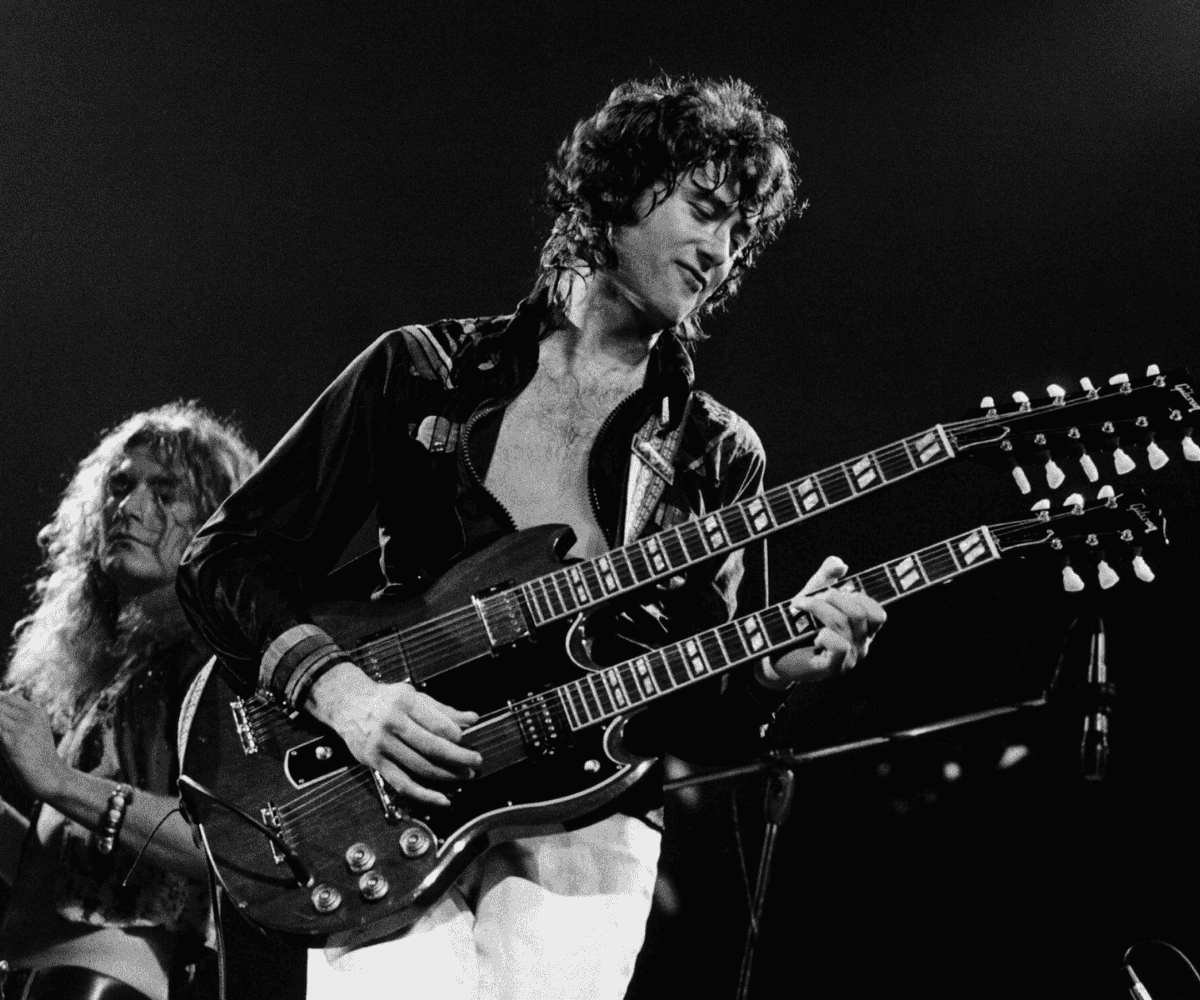
For much of his career, Jimmy Page stood as the embodiment of what it meant to own the spotlight—commanding attention not just with his sound but his sheer presence. In the 1960s, he carved out a space entirely his own, combining musical prowess with an unshakable aura that made him one of rock’s most magnetic figures.
Long before his time in The Yardbirds or his legendary run with Led Zeppelin, Page had already built an impressive résumé. While most musicians come of age in the bands that make their names, Page had already worked with a slew of iconic artists behind the scenes. He gained early insight into the mechanics of greatness—who had it, how to spot it, and how to amplify it.
Musicians flocked to Page, captivated by his fearless guitar work and visionary approach. His playing had an edge that rock bands were desperate to capture, blending raw intensity with timeless artistry. Page understood that true magic didn’t come from flash alone—it needed substance. While he was often the centerpiece, he knew the value of a great vocalist in elevating a song from powerful to unforgettable.
When asked about his favorite singers, Page pointed to artists who brought something different to the table—whether through grit or delicacy. One voice that left a lasting impact on him was Jeff Buckley’s. “I was really affected by Jeff Buckley when I heard him perform,” Page once admitted, deeply moved by Buckley’s range and emotive delivery.
“He was just absolutely staggering,” Page added. “He touched every emotion in you. He was absolutely… I mean, he just had it. Total class of his own, as you know. Because you’ve heard so many singers, and you know that they got that from Jeff Buckley.”
When it came to the possibility of reforming The Yardbirds, Page was quick to shut down the idea—and it all came down to the voice that couldn’t be replaced. “But who would sing? Keith Relf died all those many years ago,” he told Uncut. Page remembered Relf fondly for his later work in Renaissance and Medicine Head. “Keith Relf was really damn good.”
Another standout for Page was Free’s Paul Rodgers, who he later joined forces with in the supergroup The Firm. Rodgers, in Page’s view, was the epitome of vocal control and precision. “He’s a technical singer,” Page told Guitar World. “He doesn’t sing a wrong note. And yet he has a quality within his voice that on the ballads he does is really caressing. And yet it’s really vibrant in a way.”
Chris Cornell of Soundgarden also earned his admiration, but Page’s tastes clearly leaned toward singers who told stories through their voices—artists who brought emotion and mastery into perfect harmony. To him, a great vocalist didn’t just perform—they transformed the music, making it impossible to ignore.