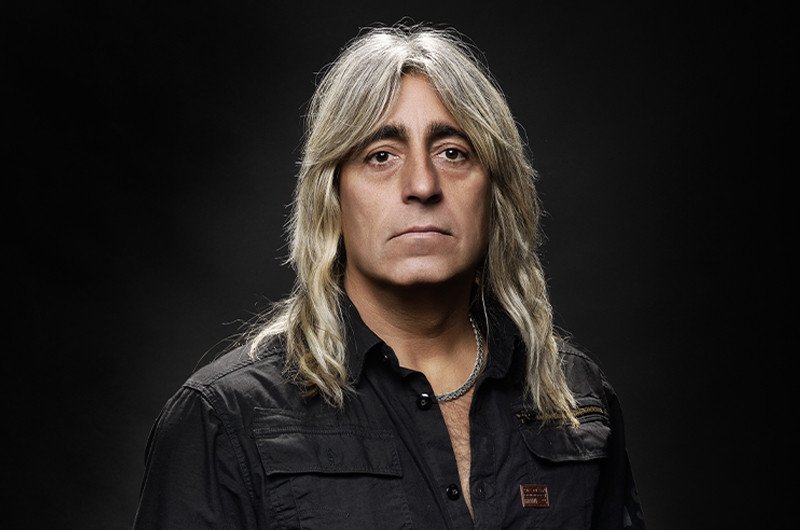
Mikkey Dee is reflecting on Motörhead’s history with a heavy heart and a lot of respect, saying it feels deeply strange that the three men he first joined the band with — Lemmy Kilmister, Würzel, and Phil Campbell — are all now gone. In a new interview with Meltdown of Detroit’s WRIF, Dee looked back on his 25 years in Motörhead and described the experience as something he will never forget.
Dee said Motörhead was never just a band to him. He called it a unique team and a family, and said the lineup he entered with created something special that lasted far beyond the music itself. Looking back on the chemistry between the four of them, he said it is unbelievable to think about how much fun they had together.
One of the heaviest parts of Dee’s reflection was thinking about Würzel, who left the band in 1996 and died in 2011. Dee said he was very sad when Würzel left, as was Lemmy, who had been his best friend. But he also explained that Motörhead recovered from that loss and went on to do amazing things as a three-piece. Now, with Lemmy, Würzel, and Phil Campbell all gone, Dee said the whole thing feels “f***ing weird,” adding that it is “really weird” to look back on it now.
Dee also spoke about Lemmy’s stubborn honesty and how that trait helped define Motörhead. He said Lemmy could be frustrating at times because he was not always open to compromise, but that the band functioned as a democracy. Dee said he and Phil often voted Lemmy down when they felt strongly about something, and that being more interested in the business side helped him understand more of what was happening behind the scenes. Even so, he said Lemmy was right many times, especially when it came to protecting the band from selling out or losing its identity.
That balance, Dee explained, was part of why the band worked so well. He said he and Phil could sometimes be a little too modern for Motörhead, while Lemmy could be a little too old-fashioned. But instead of pulling in different directions, they met in the middle. Dee joked that they were not trying to make “another Buddy Holly record,” while Lemmy would occasionally push back and ask what they were writing because they were not Rush. The tension, Dee said, helped shape the band’s sound in the best possible way.
He also praised the way Lemmy handled fame. Dee said Lemmy never really cared about the whole “rock star” thing and was, in his words, the least rock-star-like person he had ever met. That attitude, he said, made Lemmy unique. Dee recalled how Lemmy always stood up for the band, insisting that if Motörhead was being asked to do an interview or TV appearance, the whole group needed to be involved. Lemmy also defended Dee when some hardcore fans questioned his place in the band after he joined.
According to Dee, Lemmy’s message was always that “all of us gotta be front persons.” That attitude mattered, Dee said, because it gave every member space to stand up and be seen rather than disappear behind the frontman. He said that kind of equality is rare in rock, where drummers and bass players are often pushed into the background. For Dee, that respect was part of what made Motörhead feel different from every other band.
Dee also said he would never have wanted to leave Motörhead if Lemmy had lived. He explained that the band had everything: the music, the friendship, the family atmosphere and a crew that was carefully chosen over the years. He said every part of the machine fit together perfectly, which made touring a pleasure rather than a burden.
The piece also revisits the final years of Lemmy’s life. Dee recalled that Motörhead played its last show on December 11, 2015, in Berlin, only two weeks before Lemmy died on December 28, 2015, at age 70, shortly after learning he had cancer. Dee said he and Phil Campbell had tried to talk Lemmy out of continuing the second part of the European tour because his health was so poor, but Lemmy refused to stop. Dee said the frontman died “with his boots on,” and that he never had any intention of not returning to Europe.
Dee remembered his final conversation with Lemmy after that Berlin show. He said he went to Lemmy’s dressing room and asked him to work out two more songs from Bad Magic for the next leg of the tour. Lemmy agreed, and Dee said they made their usual little finger hook before parting ways. That turned out to be the last time he ever saw him.
Dee also reflected on how Lemmy tried to make small changes to his life late in the game, though Dee believes it may have been too late by then. Even so, he said Lemmy never compromised with his music, his friendships or the way he wanted to live. For Dee, that uncompromising spirit is exactly why Motörhead still matters. He said the band created its magic because the three of them worked so well together.
The article also notes the loss of Phil Campbell, who died in March 2026 at age 64 after a “long and courageous battle in intensive care following a complex major operation,” according to his family’s statement. Campbell had been with Motörhead from 1984 until the band ended in 2015, and he played on many of its classic albums, including Orgasmatron, 1916, and Bastards.
For Mikkey Dee, the memories are still vivid because Motörhead was never only about the songs. It was about a brotherhood, a shared sense of purpose, and a wildly unique chemistry that cannot be recreated. His comments make that clear: the band was bigger than its parts, and losing those parts one by one has left a silence that still feels unreal.