Brothers in Arms at 40: How Dire Straits Released the Album That Changed Music History on May 13, 1985 — and Nobody Saw It Coming
Nobody predicted what was about to happen. Not the critics. Not the music industry. Not even Mark Knopfler and Dire Straits themselves could have anticipated what happened when they released their new album on May 13, 1985. What happened was this: one of the most quietly revolutionary albums in rock history landed in a world that was not expecting it, rewrote the commercial rulebook for what a guitar-driven record could achieve, and proceeded to spend the next four decades growing in stature while everything around it changed. Today — forty years after its release — Brothers in Arms stands as one of the most significant albums ever made. And the story of how it got there is as extraordinary as the music itself.
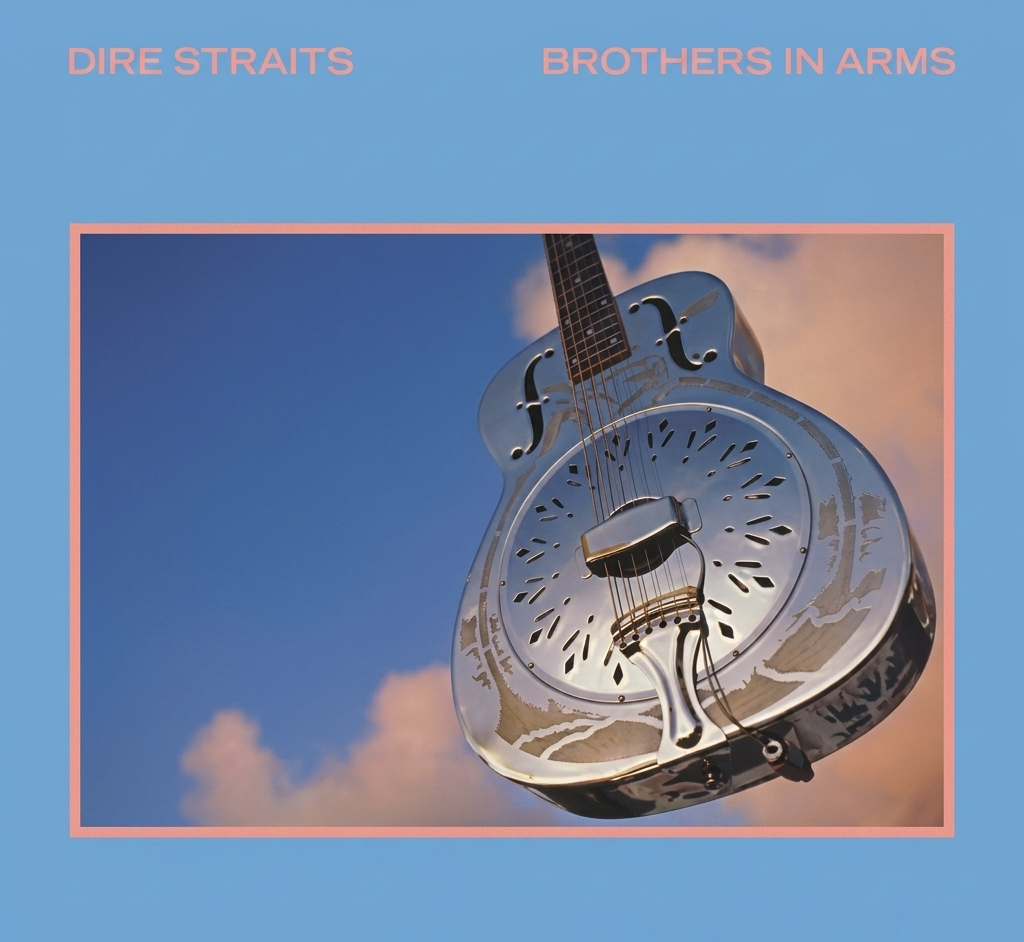
Brothers in Arms is the fifth studio album by Dire Straits, released on May 13, 1985 by Vertigo Records internationally and Warner Bros. Records in the United States. It was recorded between November 1984 and March 1985 at AIR Studios in Montserrat and London — the legendary facility founded by Beatles producer George Martin — with some overdubs and fixes completed at Power Station in New York City after a defective tape at AIR Studios wiped out several tracks. The album was produced by Knopfler alongside engineer Neil Dorfsman, and was one of the first major albums recorded using a Sony 24-track digital tape machine — a choice that gave the record its crisp, clear, and unmistakably modern sound.
What came out of those sessions was something nobody had heard before. The first half of the album developed their unique brand of arena rock — layered, cinematic, and expansive — while the second half moved into more folk-influenced territory. The whole record maintained the bluesy, guitar-centred DNA that had defined Dire Straits from the beginning, but wrapped it in a production that felt both intimate and enormous at the same time.
The commercial response was staggering. Brothers in Arms spent a total of 14 non-consecutive weeks at number one on the UK Albums Chart — including ten consecutive weeks between January 18 and March 22, 1986 — nine weeks at number one on the Billboard 200 in the United States, and 34 weeks at number one on the Australian Albums Chart. In the Netherlands, the album still holds the record for the longest run ever on the Dutch album chart with 269 weeks — non-consecutive. In Australia it was the biggest-selling album of 1985 and the second best-selling of 1986.
But the most remarkable commercial achievement of Brothers in Arms was not on any chart. It was in a format. Brothers in Arms was the first album in history to sell over one million copies in CD format — and to outsell its LP version. Rykodisc co-founder Rob Simonds subsequently wrote: “In 1985, we were fighting to get our CDs manufactured because the entire worldwide manufacturing capacity was overwhelmed by demand for a single rock title — Dire Straits’ Brothers in Arms.” One album did not just dominate the charts. It overwhelmed the manufacturing capacity of an entire global industry.
The album is certified nine-times platinum in the United States and has sold more than 30 million copies worldwide — making it one of the best-selling albums in music history. It was the first album to be certified ten-times platinum in the UK and remains the eighth-best-selling album in UK chart history.
The singles drove much of the album’s cultural penetration. “So Far Away” was released first on April 12, 1985, followed by “Money for Nothing” on June 28, 1985 — which hit No.1 on the Billboard Hot 100 and became one of the most recognisable music videos in MTV history. “Money for Nothing” video was the first to be aired on MTV Europe when the network launched on August 1, 1987. “Walk of Life” followed, peaking at number two in the UK, with “Brothers in Arms” and “Your Latest Trick” completing a five-single campaign that kept the album in the charts for the better part of two years.
The title track carried particular weight. “Brothers in Arms” was written in 1982, the year of Britain’s involvement in the Falklands War — and has since become a favourite at military funerals. In 2007, to mark the 25th anniversary of the conflict, Knopfler recorded a new version of the song at Abbey Road Studios to raise funds for British veterans who he said “are still suffering from the effects of that conflict.” The song’s music video won the Grammy Award for Best Music Video at the 29th Annual Grammy Awards in 1987. Classic Rock critic Paul Rees rated it as Dire Straits’ fifth greatest song, citing its “dignified but lasting power” and “stunning guitar solo.”
The awards came in waves. The album won the Grammy Award for Best Engineered Album, Non-Classical in 1986, and Best British Album at the 1987 Brit Awards. The 20th Anniversary reissue won another Grammy in 2006 for Best Surround Sound Album. Rolling Stone ranked Brothers in Arms number 418 on its updated list of the 500 Greatest Albums of All Time in 2020, and Q magazine ranked it number 51 on its list of the 100 Greatest British Albums Ever.
Knopfler himself has spoken about the album’s legacy with characteristic ambivalence — the reflectiveness of a man who always cared more about the music than what the music meant commercially. “I don’t sit at home and play my stuff — I think that would be an unbelievably sad thing to do,” he said. “But when I’m on the road I see all these people that want to hear you play some of these songs, and I think that’s just fine. These songs — some of them are milestones in people’s lives. They’re really important to them.” He also reflected more broadly on the nature of success: “I recommend success to anybody. I can’t think of anything good about fame, though. If you can, let me know.”
The album was Dire Straits’ final studio record before they reunited and recorded 1991’s On Every Street — making it in retrospect the closing statement of the band’s most creatively and commercially dominant period. The Brothers in Arms Tour that followed ran from April 1985 to April 1986 — 248 gigs across 117 cities.
In 2025, to commemorate the album’s 40th anniversary, Brothers in Arms was re-released in several formats including a five LP box set and triple CD. Forty years on, the numbers have never stopped being staggering. The music has never stopped resonating. And the album that overwhelmed an entire industry’s manufacturing capacity on the strength of its demand alone remains exactly what it was on May 13, 1985 — a record unlike anything else that had come before it, and very little that has come since.