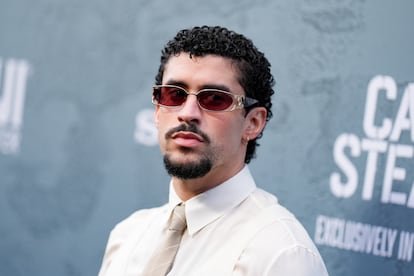
A growing online campaign calling for the National Football League (NFL) to ditch Puerto Rican superstar Bad Bunny as the headliner of the **2026 Super Bowl halftime show in favor of country legend George Strait has attracted widespread attention and stirred controversy as fans and critics debate the direction of one of the year’s biggest cultural stages.
Founded on Change.org in October 2025, the petition argues that the halftime show should reflect traditional American musical heritage, remain “family-friendly” and appeal to a broader national audience. As of Feb. 3, 2026, the petition had garnered more than 122,000 signatures, with supporters urging the NFL to reconsider its pick of Bad Bunny.
The petition’s language reflects broader cultural tensions surrounding the halftime show. Its main arguments include:
- The Super Bowl halftime show “should unite our country, honor American culture, and remain family-friendly,” and not be used to showcase artists seen as politically divisive or outside traditional American genres.
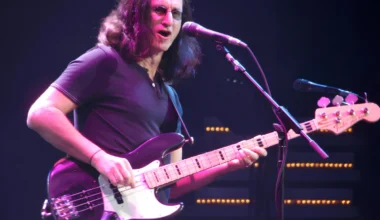
- George Strait — a 73-year-old “King of Country” with **60+ No. 1 hits and more than four decades in the music industry — is presented as someone who could bridge generations and represent a more “classic” American musical identity.
- The petition also raises objections to aspects of Bad Bunny’s public persona and past performances, including his artistic style and politically charged messaging, asserting that this is at odds with what some signers view as a “family-appropriate” Super Bowl entertainment choice.
Proponents of the petition argue that country music and artists like Strait better embody what they see as the cultural roots of the United States and the traditional fan base of the NFL — claims that reflect broader debates over pop culture, national identity and representation.
The petition’s surge in signatures this week was fueled in part by reactions to Bad Bunny’s recent Grammy win and acceptance speech, during which he made statements on immigration and identity that resonated deeply with his fans but drew criticism from his detractors.
Critics have labeled the upcoming halftime selection a “Woke Bowl,” and some signers have publicly framed their objections in cultural or political terms, though much of that online commentary has also been criticized as exclusionary or discriminatory.
It’s worth noting that Bad Bunny (Benito Antonio Martínez Ocasio) is an American citizen by birth — Puerto Rico is an unincorporated U.S. territory. Despite this, some opposition centers on his music style, language use and perceived political messaging rather than legal nationality.
Support for replacing Bad Bunny comes largely from fans aligned with more traditional or country music audiences and some conservative commentators who believe the halftime show should reflect long-standing American musical traditions. Several social media users and commenters have amplified the campaign, framing it as part of a broader cultural debate over pop culture influences.
Conversely, many fans and music industry observers defend Bad Bunny’s selection as a reflection of the NFL’s goal to reach a global and diverse audience, noting that his popularity — including being one of the most streamed artists worldwide — makes him a compelling choice for a highly watched international broadcast. Critics of the petition also point out that calls for replacement often overlap with broader cultural pushback against diversity in mainstream entertainment.
Other online petitions exist on both sides of the debate. Some call for keeping Bad Bunny on the Super Bowl stage and opposing any attempt to remove him, while others advocate more broadly for American performers at major national events.
Despite the petition’s traction, the NFL has stood by its decision to have Bad Bunny headline the halftime show, highlighting his massive global appeal and his status as one of the most popular artists in the world. The league’s decision underscores its strategy to broaden the event’s audience and embrace diverse musical influences.
With the Super Bowl scheduled for Feb. 8, 2026, at Levi’s Stadium in Santa Clara, California, it remains unlikely that the petition will lead to a change in performers at this late stage. However, it has succeeded in sparking a broader conversation about culture, entertainment and national identity in one of television’s most watched events.