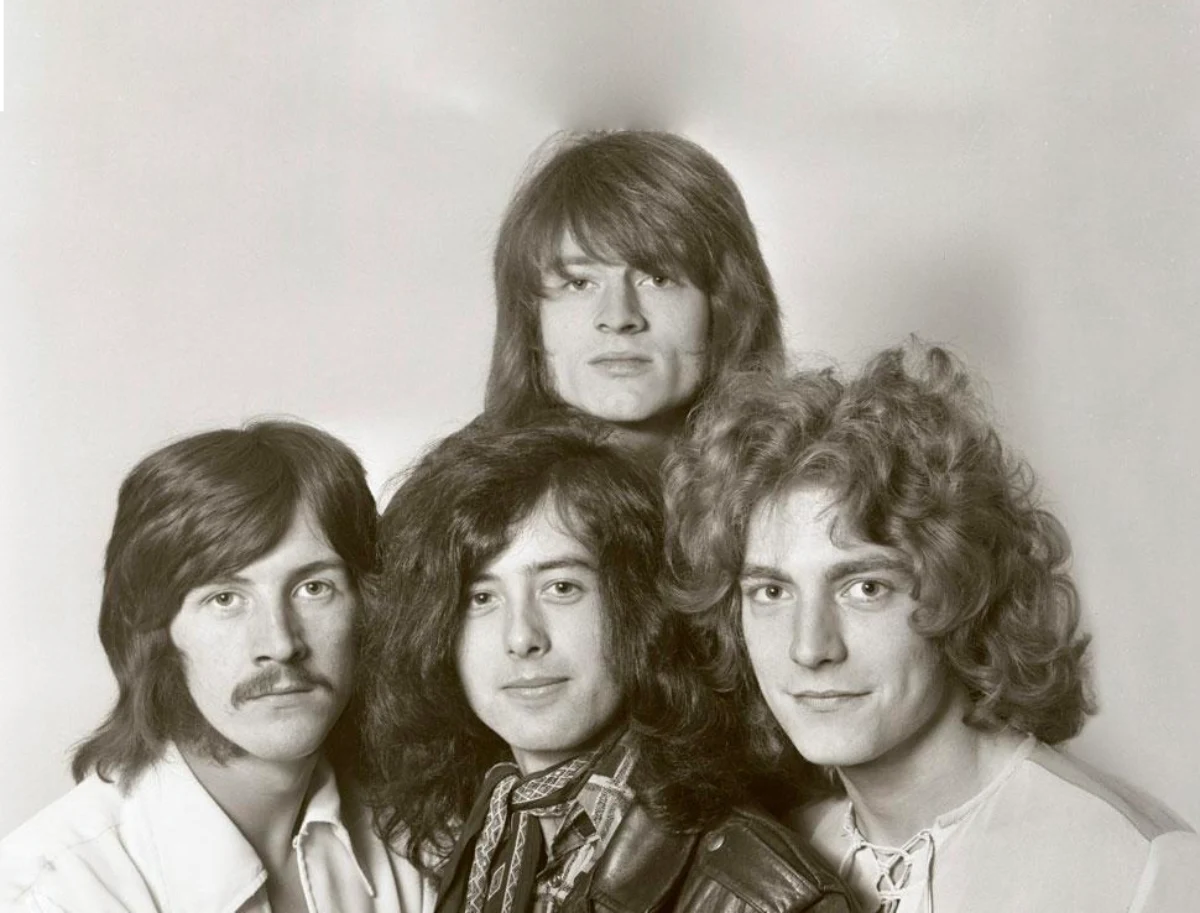
On September 7th, 1968, a night that would change rock history quietly began at the Gladsaxe Teen Club in Copenhagen. Fans expected the Yardbirds, but instead were confronted with a sign reading ‘The New Yardbirds’—a name that left many confused and disappointed. At that moment, they weren’t yet called Led Zeppelin. Only Jimmy Page was a familiar face; John Paul Jones, John Bonham, and Robert Plant were strangers to the crowd. Decades later, this quartet would be hailed as one of rock’s most revolutionary bands.
From their earliest days, Led Zeppelin shattered the old rock formula. Their pounding drums, scorching guitars, epic song lengths, and a fearless blend of blues and classical influences obliterated stale music conventions. Unlike the flower power escapism of Laurel Canyon’s counterculture, the gritty post-war industrial landscape of Birmingham shaped their sound—a raw reflection of soot-stained streets rather than peace-and-love ideals.
Capturing this harsh reality wasn’t easy, but Page and his contemporaries in bands like Black Sabbath knew exactly where to look: the blues. Yet some bands were already pushing blues into heavier territory, giving it a muscular edge. Ritchie Blackmore of Deep Purple pinpointed the Small Faces as the first group to bring this harder sound forward.
In a 1978 interview with Trouser Press, Blackmore said, “I liked their hard approach when they came out and did ‘Whole Lotta Love’. I immediately tuned in with that type of style because before when we were fiddling around with orchestras, I thought: something’s wrong.” He gave credit to Small Faces as an inspiration, passing influence from Jeff Beck to Led Zeppelin and beyond.
Though the Small Faces aren’t usually pegged as heavy rock, their darker edge challenged the era’s flower power clichés. Tracks like ‘Itchycoo Park’ had a sly, ironic tone, while songs such as ‘All Or Nothing’ showcased a powerful, almost Zeppelin-like intensity. Steve Marriott’s fierce vocals and Kenney Jones’s pounding drums built a gathering momentum reminiscent of Led Zeppelin’s use of classical crescendos.
While the connection between the Small Faces and Led Zeppelin isn’t always obvious, those brooding flourishes and heavier riffs helped lay the groundwork for the seismic shift in rock music that was about to explode.