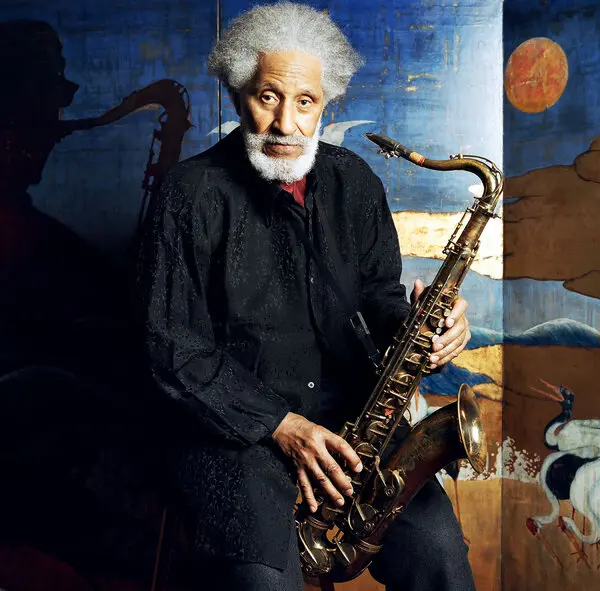
Rollins built a career that stretched across more than six decades and more than 100 albums, with landmark recordings like Saxophone Colossus, Way Out West, A Night at the Village Vanguard, and Freedom Suite. AP described him as a restless genius whose bold tone and constant experimentation kept him at the cutting edge of jazz, while also noting his work with Miles Davis, Dizzy Gillespie, John Coltrane, and Thelonious Monk.
His most famous bridge into rock came in 1981, when the Rolling Stones brought him into the Tattoo You sessions. Mick Jagger had met Rollins through a mutual friend in New York, but Rollins was hesitant at first and only agreed after his wife urged him to do it. He later said he did not initially view the Stones as being on jazz’s level, but decided to try to make the session work as well as possible.
Rollins ended up playing on “Slave,” “Neighbours,” and, most notably, “Waiting on a Friend.” That song had been an unfinished Stones idea for years before Rollins’ sax line helped complete it, giving the track its wistful, unmistakable emotional lift. The song later became a radio hit, reaching No. 13 on the Billboard Hot 100.
Jagger later recalled that Rollins told him to “dance the part out,” and that simple approach helped shape one of the Stones’ most elegant late-period songs. Rollins himself would later joke about hearing his own playing in a supermarket in Hudson, New York, not realizing at first that the sax line he heard on the radio was his own. He also said he once dismissed the Stones as derivative of black blues, a view that changed once he actually worked with them.
Even in the end, Rollins kept moving forward artistically. AP noted that he retired from performing in 2014 because of pulmonary fibrosis, after playing his last concert in 2012, but his sense of himself never stopped evolving. He was a musician who kept pushing, kept searching, and kept refusing to settle — which is exactly why his influence reached far beyond jazz and into rock history as well.