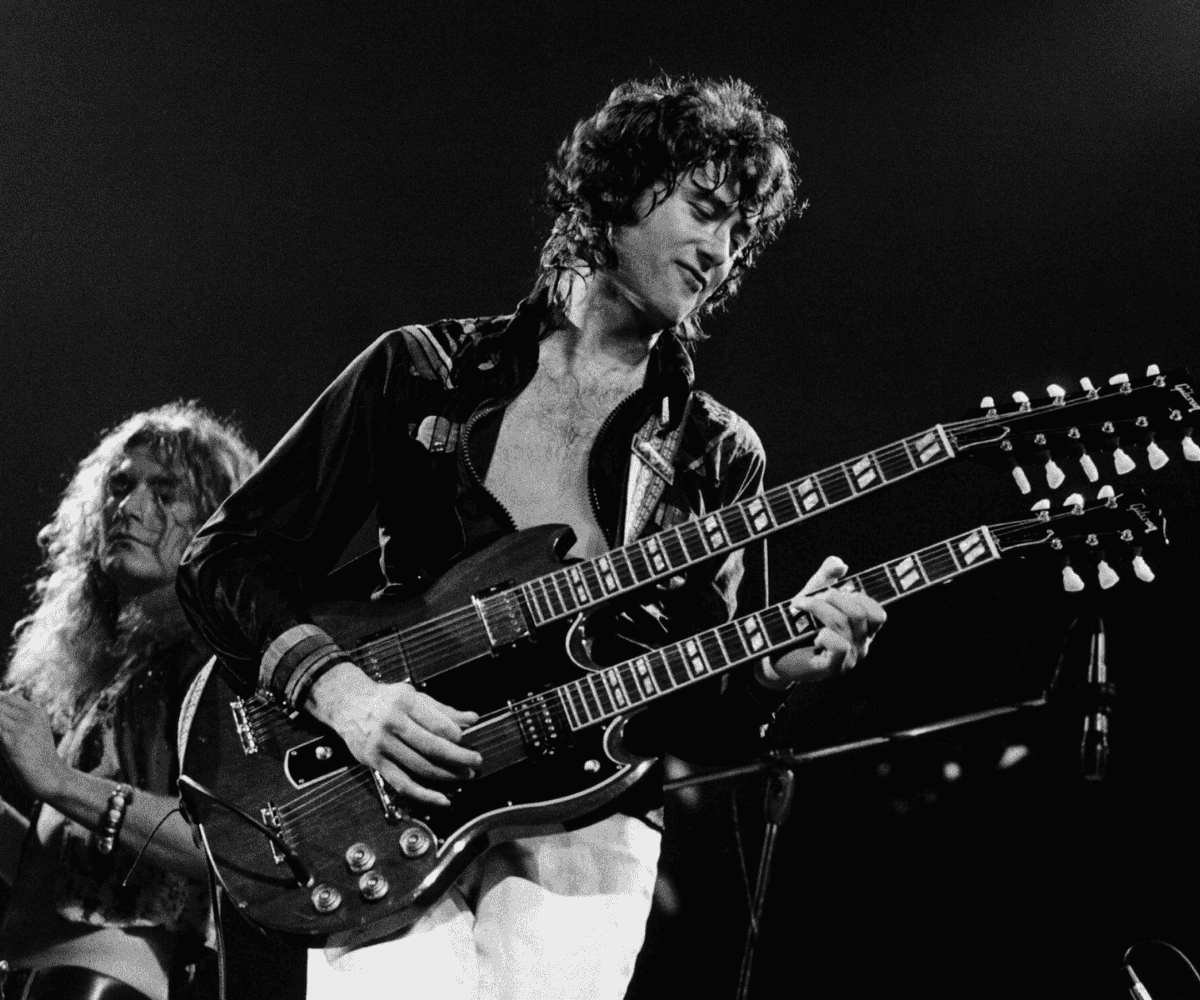
Few bands have left a deeper mark on rock and roll than Led Zeppelin. Sure, The Beatles brought joy and melody, and The Rolling Stones delivered grit and swagger—but the second you hear “Whole Lotta Love” or “Dazed and Confused”, something clicks. Suddenly, loud guitars become the loudest form of freedom. And standing behind that sound, shaping it riff by riff, was Jimmy Page.
But as Led Zeppelin exploded into stardom, one thing quietly burned at Page: comparisons to his former Yardbirds bandmate, Jeff Beck.
To most guitarists, being mentioned in the same breath as Jeff Beck would be an honor. Beck was a wizard—able to bend the guitar into whatever soundscape he wanted, always pushing the boundaries of tone and technique. But to Page, the comparison was insulting—especially during Zeppelin’s early days.
“It really pissed me off,” Page once said bluntly. “When people compared our first album to the Jeff Beck Group and said it was very close conceptually. It was nonsense, utter nonsense. The only similarity was that we’d both come out of The Yardbirds and acquired certain riffs individually from that time.”
Page wasn’t being arrogant—he was trying to build something completely different. Led Zeppelin’s debut was not meant to ride on anyone’s coattails. It was designed to be heavier, darker, louder. Even though both guitarists had roots in the blues, their evolution took wildly different paths.
Take “You Shook Me” for example—a blues classic that both Beck and Page covered. On paper, it’s the same song. But listen closely, and the difference is obvious. Beck’s version is playful and expressive—full of color. Page’s take feels dangerous, like the earth might crack beneath the riff. One brought lightning, the other thunder.
Over time, the two carved out their own musical identities. Beck ventured into jazz fusion and instrumental rock, twisting the guitar into elegant new shapes with albums like Blow By Blow. Page stayed rooted in the primal pulse of rock but expanded its reach, layering Zeppelin’s sound with folk, Eastern scales, orchestration, and raw experimentation—especially on epic albums like Physical Graffiti.
At their core, both guitarists shared one thing: an unrelenting desire to go beyond the blues. Each took that familiar language and made it his own—Beck with elegance, Page with force. It wasn’t a competition; it was two paths from the same source, stretching toward different horizons.
And maybe that’s why the comparison stung. Because Jimmy Page wasn’t trying to be like Jeff Beck. He was trying to become something else entirely—and he did.