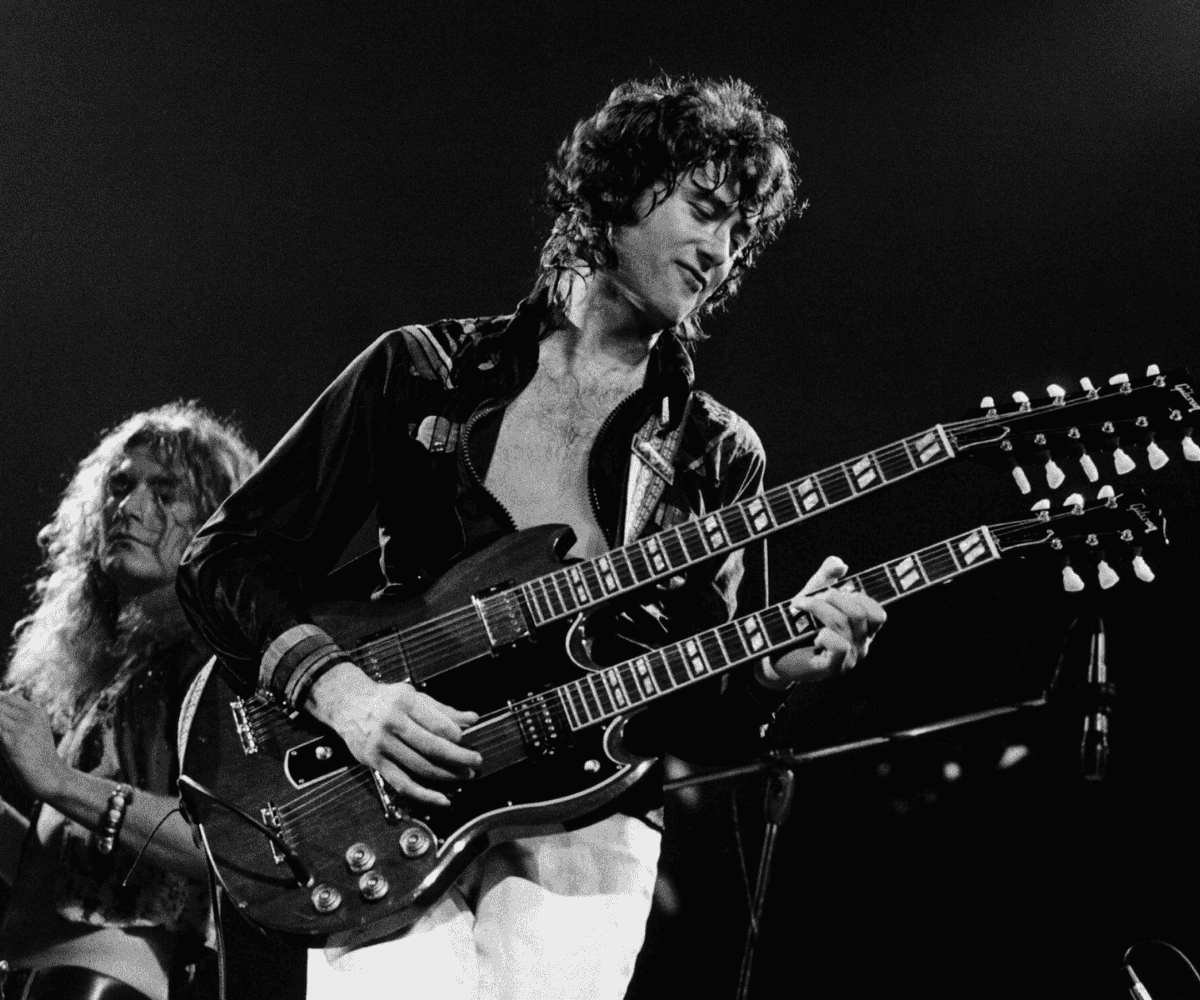
Life as a working musician rarely slows down. Between endless touring and long hours in the studio, the grind rarely allows time to breathe, let alone catch a concert. Jimmy Page, even at the height of his powers, was no exception. In fact, one of his biggest regrets as a musician wasn’t missing a session or a show—it was missing the chance to witness his hero, Jimi Hendrix, perform live.
Before Page became a guitar icon, he was a prolific session player, laying down riffs on countless 1960s records, including Donovan’s ‘Sunshine Superman’. Even then, his roots were firmly planted in the blues, which made his move to The Yardbirds a natural progression. Picking up where Eric Clapton left off, Page began pushing the boundaries of the genre, blending blues with the psychedelic experiments that would soon come to define his sound.
That musical evolution ultimately led to Led Zeppelin. Formed after the collapse of The Yardbirds, Page’s new group exploded onto the scene with their 1968 debut. With tracks like ‘Communication Breakdown’ and ‘How Many More Times’, Page introduced a new level of aggression and complexity to rock guitar, helping to shape what would become the blueprint for heavy music.
But even as Page carved out his own legacy, Hendrix loomed large.
Bursting onto the scene in the late 1960s, Jimi Hendrix brought a wild, soulful fusion of blues, psychedelia, and raw electricity. His approach to the guitar was otherworldly—flipping conventions on their head with innovative use of feedback, effects, and sheer showmanship. He was the benchmark, the kind of artist who seemed to channel something beyond human when he played.
Page deeply admired Hendrix, not just for his technique but for the spirit behind his playing. Yet somehow, despite their overlapping timelines and shared stages in rock history, Page never managed to see him live. It’s a regret that’s haunted him.
As he recalled in Light and Shade: Conversations with Jimmy Page, the opportunity was always just out of reach:
“Every time I came back from tour and Hendrix was playing somewhere, I would always say to myself, ‘Oh, I’m just so exhausted, I’ll see him next time.’ I just put it off, and, of course, there ultimately never was a next time. I’m really, really upset with myself for never seeing him. I really wanted to hear him.”
By the time Hendrix died in 1970, Page had already become a towering figure in the guitar world. But Hendrix’s influence never left. In Zeppelin’s soaring solos and thunderous riffs—from ‘Stairway to Heaven’ to ‘Kashmir’—you can feel the ripple effect of what Hendrix had brought to the instrument.
Jimmy Page may not have shared that one night in the crowd, watching Hendrix set his guitar ablaze, but in a deeper sense, the fire lives on. Hendrix lit the path—and Page carried the torch forward.