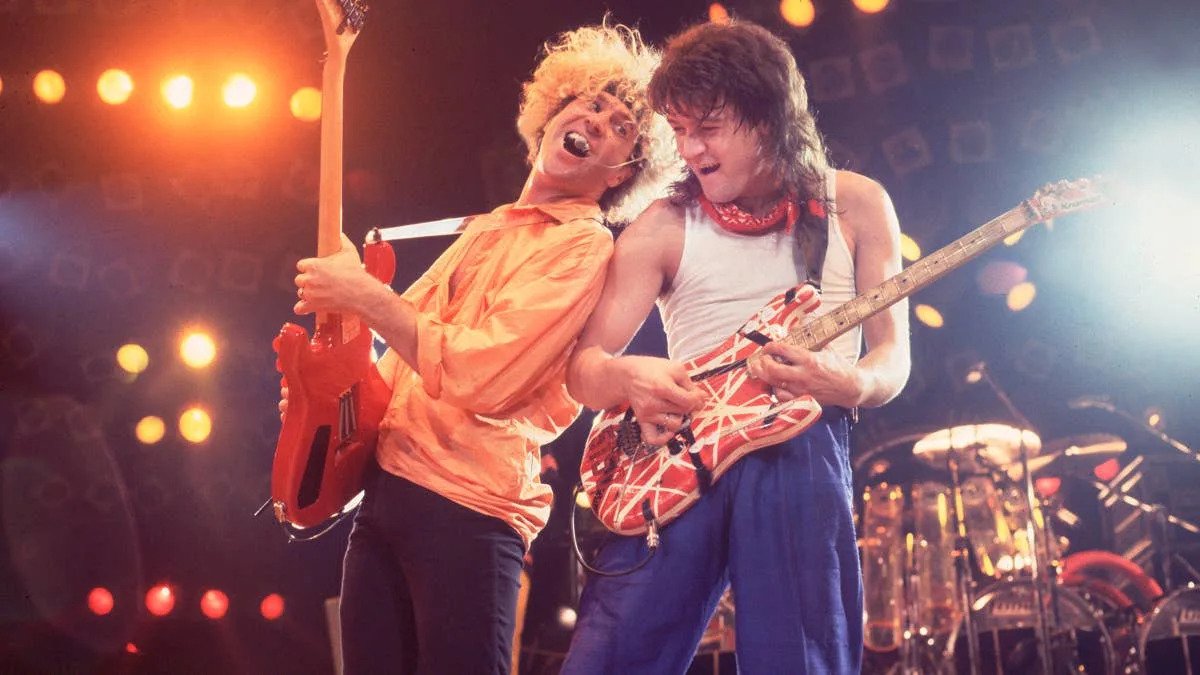
Van Halen’s “Why Can’t This Be Love” arrived in 1986 as more than just a single. It was the opening statement of a new chapter for the band, the first track many fans heard after Sammy Hagar replaced David Lee Roth, and the lead single from 5150, the album that helped launch the “Van Hagar” era. The song was built around a more keyboard-driven sound than earlier Van Halen hits, with Eddie Van Halen handling both guitar and keyboard duties on the track.
That shift made the song a turning point. For some listeners, the synthesizer-heavy feel was a shock; for others, it showed that Van Halen could evolve without losing its edge. Sammy Hagar later said the keyboard riff was crafted so well that it still felt like a guitar part, which helped the song land with both longtime fans and a new audience. The result was a huge commercial success: the single reached No. 3 on the Billboard Hot 100 and hit No. 1 on Cash Box’s Top 100, while also becoming an international hit in markets including the UK, Australia, Germany, Canada, the Netherlands, and Sweden.
The song also became infamous for its lyrics, especially the line, “Only time will tell if we stand the test of time,” a phrase that has been mocked for years as one of rock’s most self-referential lines. But that very line is part of why the song stuck in the culture. It is catchy, a little goofy, and unmistakably tied to a band in transition—one that was trying to prove it could survive a major lineup change and still dominate the charts.
In hindsight, “Why Can’t This Be Love” was never just a hit single. It was the sound of Van Halen stepping into a new era with a new singer, a new texture, and a new audience, while keeping the same swagger that made them one of rock’s biggest bands. That is why people still talk about it: not because it was the band’s hardest song, but because it marked the moment Van Halen changed shape without disappearing.