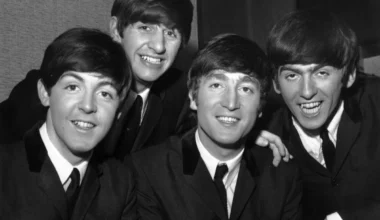

For much of the 1990s, Sir Paul McCartney — one of the most celebrated figures in rock history — felt overlooked and even disrespected by the Rock and Roll Hall of Fame. In a candid, previously unpublished interview with journalist Joe Hagan (per Ultimate Classic Rock), McCartney revealed that a combination of misunderstood conversations, long‑standing friction with Rolling Stone co‑founder Jann Wenner, and perceived favoritism toward John Lennon led him to view the Hall of Fame as a place of unresolved snubs and personal frustration.
A Confusing Invitation — and an Unrealized Promise
1994: The John Lennon Induction
In 1994, McCartney was invited to speak at the Rock and Roll Hall of Fame ceremony honoring John Lennon posthumously. It was a high‑profile moment, and McCartney agreed. However, once that invitation was extended, McCartney asked an obvious follow‑up: would he also be inducted that night?
According to McCartney, Wenner — who played a key role in organizing the Hall’s early ceremonies — told him that discussions of his own induction should wait until the following year. McCartney agreed and expected the Hall of Fame to make good on that verbal understanding.
But when 1995 came and went without any communication, McCartney realized something was off. “What’s going on?” he recalled wondering at the time. “I don’t appear to be in. F—ing bastards.” The frustration stemmed not just from the delay, but the lack of any follow‑up from the Hall.
Wenner’s Response
Interestingly, Wenner later said he didn’t remember making any such deal with McCartney — a response that only added to Sir Paul’s irritation. What McCartney had taken as a clear implication of future induction became, in Wenner’s recollection, nothing of the sort.
McCartney’s Perspective — Favoritism and Revisionism?
At the heart of McCartney’s frustration was not just a delayed induction but a sense that certain narratives about The Beatles were gaining cultural momentum at the expense of his own legacy.
A Rivalry with Lennon’s Posthumous Legacy
McCartney noted that his relationship with Lennon was always equal in life — “we were always equal,” he said — but once Lennon was tragically murdered in 1980, Lennon became a martyr figure. McCartney compared Lennon’s legacy to “the Buddy Holly, the James Dean character,” iconic figures whose early deaths crystallized their places in cultural memory.
He saw this shift reflected in how Rolling Stone and Wenner treated the legacy of Lennon versus that of Lennon’s former bandmate. McCartney believed the Hall, influenced by Wenner and by certain posthumous narratives, held a bias that benefited Lennon — a perception that fueled McCartney’s skepticism.
“The thing about John Lennon and McCartney was we were always equal,” he said. “But, of course, once John got murdered … revisionism started to go on. And Yoko certainly helped it. Jann was a big part of that. So that naturally colored my thinking.”
The Role of Yoko Ono
McCartney also acknowledged the part that Yoko Ono — Lennon’s widow — played in shaping his late legacy. He suggested that Ono’s influence in preserving and promoting Lennon’s image contributed to a cultural narrative that sometimes elevated Lennon above other members of The Beatles, including McCartney himself.
Finally Inducted — But Not Without Humor
Despite his misgivings and the rocky buildup, McCartney eventually was inducted into the Rock and Roll Hall of Fame — as both a member of The Beatles and later as a solo artist.
But his frustration from the earlier years didn’t evaporate entirely. When the induction finally happened, McCartney’s daughter Stella McCartney made a subtle yet pointed fashion statement: she wore a t‑shirt emblazoned with the words “About F—ing Time.” The moment blended humor and relief, underscoring how long Paul had waited to be formally honored.
A Legacy Bigger Than a Snub
Whatever the behind‑the‑scenes politics or misunderstandings, Paul McCartney’s place in rock history is unassailable. As a key songwriter, bassist, and voice of The Beatles — the band widely regarded as the most influential in modern music — his contributions have shaped generations of music lovers and artists.
Still, McCartney’s candid reflections reveal that even legends can feel overlooked when institutional recognition doesn’t align with personal expectations or cultural perceptions.
His story reminds us that rock and roll — like any cultural institution — is shaped as much by narrative and personality as it is by talent and achievement.